
What is One Way a Command Economy Affects the Lives of Private Citizens? 7 Critical Impacts in 2025
1. Introduction
When asking what one way a command economy affects the lives of private citizens, it’s important to see beyond textbooks. In a government-controlled economy, the state determines production, pricing, and employment, leaving citizens with very limited freedom to make personal economic choices. These restrictions create a reliance on informal markets, where most households earn their real income. Limited consumer choice, strict state ownership, and central planning systems shape how individuals live, work, and survive. The impact of the command economy on daily life is visible in income distribution, access to goods, and personal autonomy. This article explores the main effects on citizens and how people adapt to survive under these restrictive conditions.
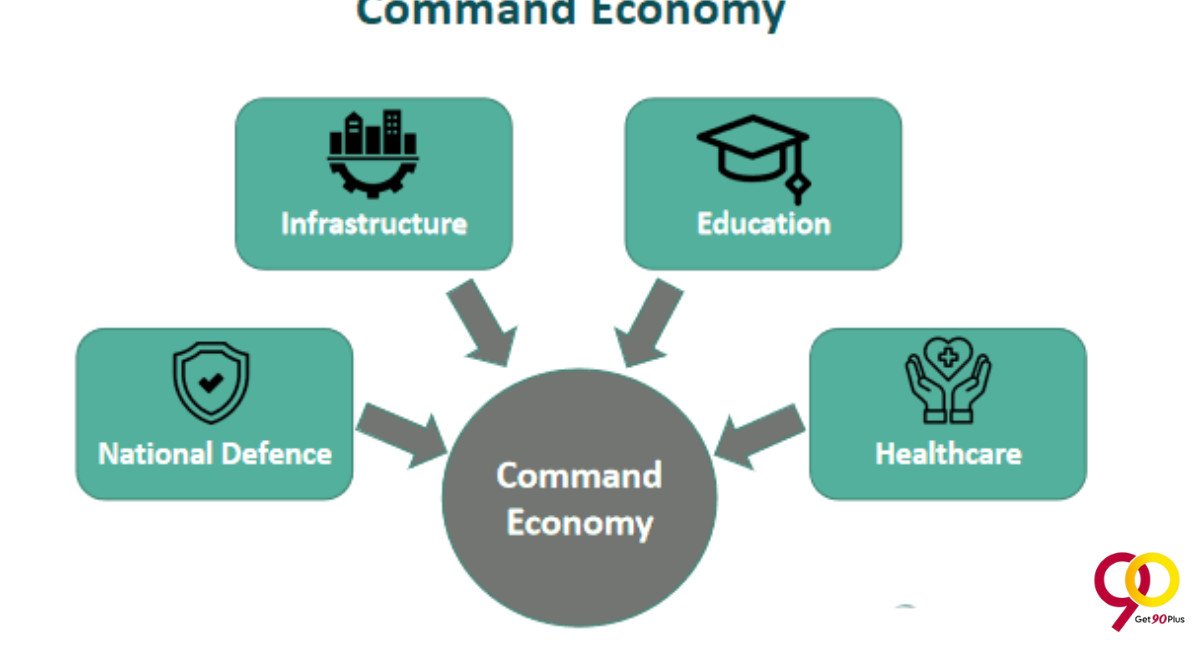
Key points
- A command economy is a government-controlled economy where the state directs production, prices, and employment.
- Citizens often rely on informal markets because official wages and supply are insufficient for survival.
- Limited consumer choice restricts access to everyday goods and narrows household options.
- Employment is assigned by the state, reducing economic decision-making power and personal career autonomy.
- Inflation and state extraction act as hidden taxes, eroding household savings and wealth.
- State ownership of property and industry prevents true entrepreneurship, while shadow markets create hidden inequality.
- Technology, including smartphones and cryptocurrency, provides partial autonomy in central planning systems.
- Health and nutrition suffer under systemic scarcity, affecting demographics and fertility rates.
- The dual economy forces citizens to balance performative state loyalty with informal survival strategies.
- Understanding the impact of the command economy on daily life highlights the contrast with market-based freedoms.
What Is One Way a Command Economy Affects the Lives of Private Citizens?
The clearest answer to what is one way a command economy affects the lives of private citizens is this: it forces people to survive outside the official system. When the state controls jobs, prices, and property, citizens lose economic freedom and must depend on informal markets just to meet basic needs.
A command economy may look organized from the outside. However, daily life inside tells a different story. When the government controls production, wages, and prices, private citizens often face shortages, low wages, and limited opportunity. Over time, this creates a “dual life” where people work for the state officially but survive through unofficial markets
What Is a Command Economy and How Does It Work?
A command economy is a government-controlled economy where the state makes all major economic decisions. The role of government in a command economy replaces supply and demand with a central planning system, meaning officials decide what to produce, how much to produce, and who receives it.
In this system, the state controls land, factories, and resources through state ownership. Instead of market signals, leaders use price controls, production quotas, and strict economic regulation to guide the allocation of resources. While this aims to create wealth equality, it often limits innovation and reduces economic freedom for individuals.
In theory, this system promises stability. Historically, leaders believed it would prevent inequality and economic crashes. Yet, when governments suppress market signals, shortages often appear. Stores may offer only one brand of soap or none. That’s how limited planning turns into limited choice.
What Is One Way a Command Economy Affects the Lives of Private Citizens the Most?
The strongest answer to what is one way a command economy affects the lives of private citizens is the loss of economic freedom. When the state controls wages, jobs, and goods, private citizens cannot freely choose how to earn or spend their income.
This loss creates what researchers call a “dual economy.” In countries like North Korea, informal markets provide about 97% of household income, while the formal state sector provides less than 3% 6. This shows the real impact of the command economy on daily life. People keep state jobs to avoid punishment, yet they survive through hidden markets.
Income Reality in North Korea
Income Source | Share of Household Income |
Informal Markets | ~97% 6 |
Formal State Wages | <3% 6 |
When citizens depend on informal trade to survive, the official system becomes symbolic. The state assigns roles. The markets provide food.
How Does Government Control Over Jobs and Income Affect Private Citizens?
In a command system, the government controls employment through public sector employment and assigns jobs based on national needs. This answers the question, How does a command economy affect citizens at a personal level. You don’t choose your career freely. The state does.
Wages are often fixed and disconnected from productivity. This limits motivation and weakens efficiency. Although unemployment appears low, the lack of choice reduces personal fulfillment. Over time, citizens lose economic decision-making power, since they cannot negotiate pay or change careers easily.
For example, in North Korea, citizens attend state jobs mainly to avoid penalties 6. However, real income comes from informal trade. This shows how economic systems and private citizens interact differently when markets are suppressed
How Does a Command Economy Limit Consumer Choice and Personal Spending?
One direct result of heavy government intervention is limited consumer choice. Because prices are set through price controls, shortages often occur. Goods disappear from shelves when production fails to meet demand 1.
In February 2025, rice prices in Pyongyang reached 8,300 won per kilogram, nearly double the price recorded in December 2023 10. Such inflation acts like a hidden tax. It erases savings and harms small traders 6. This clearly shows the impact of the command economy on daily life.
Mechanism | Effect on Citizens |
Price Controls 3 | Shortages and narrow product variety |
Inflationary Extraction 6 | Loss of savings |
Forced Labor 6 | Loss of earning time |
When inflation rises because the state prints money, families suffer first. Savings shrink. Food becomes expensive. Survival becomes harder.

What Happens to Private Property and Business Ownership in a Command Economy?
In a system built on state ownership, private property is limited or not recognized. This increases government control over businesses, since the state runs most industries. Individuals cannot freely build companies or own large assets.
Yet citizens adapt. In North Korea, “Shadowy Private Enterprises” operate under the names of state-run industries, allowing private individuals to earn income unofficially 7. These arrangements require bribery, which consumes around 9% of household income 6.
Extraction Type | Estimated Impact |
Bribery | ~9% income 6 |
Forced Labor | Lost work time 6 |
Inflation Tax | Savings erosion 6 |
This creates inequality. Those who can afford bribes gain advantage. Others struggle. That’s one of the hidden Pros and cons of a command economy rarely discussed openly
What Is a Command Economy and How Does It Work?
A command economy is a government-controlled economy where leaders control production, pricing, and distribution through a central planning system. The role of government in a command economy replaces supply and demand, meaning the state controls factories, land, and resources through state ownership and strict economic regulation.
In this system, officials use price controls, production quotas, and political goals to guide the allocation of resources instead of market signals 3. While the aim is often wealth equality, the system reduces economic freedom because private citizens cannot freely decide what to produce, sell, or buy. Over time, this structure reshapes how economic systems and private citizens interact in daily life.
How Does Government Control Over Jobs and Income Affect Private Citizens?
Government job assignment limits career freedom and weakens personal motivation. In a system built around public sector employment, the state decides who works where, and wages are often fixed regardless of skill or effort 1. This reduces economic decision-making power for individuals.
Because the government controls income through centralized authority, personal ambition becomes secondary to political needs. Citizens attend assigned jobs to avoid punishment, yet many earn real income through informal trade 6. This dynamic shows the deep connection between economic systems and private citizens when Labor markets are tightly controlled.
How Does a Command Economy Limit Consumer Choice and Personal Spending?
A command economy limits consumer options by enforcing price controls and rigid production targets. Since prices do not reflect real demand, shortages and narrow selections often appear on store shelves 3. This leads to limited consumer choice and frustration for families.
For example, rice prices in Pyongyang reached 8,300 won per kilogram in February 2025, nearly double the price in December 2023 10. Inflation like this acts as a hidden tax 6. It reduces savings and increases hardship, clearly showing the impact of the command economy on daily life
What Happens to Private Property and Business Ownership in a Command Economy?
In a command system, state ownership dominates land and industry, which strengthens government control over businesses. Private property rights are limited, and entrepreneurship becomes difficult or illegal 3. This weakens innovation and restricts upward mobility.
Despite restrictions, citizens create informal businesses known as Shadowy Private Enterprises that operate under state-run industries 7. However, bribery consumes around 9% of household income 6. This reflects both the hidden Pros and cons of a command economy and the limits placed on citizen rights in a planned economy.
How Does a Command Economy Compare to the U.S. Market Economy?
The key difference between command and market economy lies in who makes decisions. In the United States, individuals and businesses decide what to produce based on demand, while in a command system the state directs economic activity through centralized authority.
Market economies protect economic freedom, private property, and flexible wages. Command systems rely on strict economic regulation and centralized authority 3. This contrast helps students understand how different economic systems and private citizens interact under varying levels of government control

What Are the Human and Social Effects of Living in a Command Economy?
Long-term scarcity affects health, family life, and demographics. In North Korea, around 40% of the population is undernourished, and 18% of children experience stunting 23. These numbers show how deeply economic structures influence daily survival.
Fertility rates have fallen sharply, dropping to an estimated 1.38 25. Poor childbirth conditions and economic pressure discourage family growth. These trends highlight how the impact of the command economy on daily life extends beyond income and shapes the future of society itself.
How Does Technology Help Citizens Survive in a Command Economy?
Technology provides limited relief within rigid systems. In North Korea, smartphones help traders coordinate prices and logistics despite state restrictions 20. This creates informal trust networks outside the official central planning system.
In Cuba, cryptocurrency allows citizens to protect savings from inflation exceeding 70% 11. Digital tools reduce the pressure of government intervention and provide partial autonomy. These adaptations show resilience even under heavy state control.
How Does Inflation and State Extraction Reduce Household Survival?
One major answer to what is one way a command economy affects the lives of private citizens is through inflation and forced extraction. When the state prints money to cover shortages, it creates rising prices that erase savings. This hidden tax weakens families and reduces real income 6.
In North Korea, rice prices reached 8,300 won per kilogram in February 2025, nearly double the 2023 level 10. Inflation acts as silent wealth transfer from citizens to the regime 6. Forced labor campaigns and “patriotic contributions” also remove time and resources from households 6. This deepens the impact of the command economy on daily life.
Extraction Method | Effect on Citizens |
Inflationary Extraction 6 | Loss of savings |
Forced Labor 6 | Lost earning time |
Patriotic Levies 6 | Reduced household resources |
How Does the Dual Economy Change Daily Life for Private Citizens?
The dual economy means citizens live two separate economic lives. Officially, they work in the formal state sector. Unofficially, they depend on informal markets for survival. This explains clearly How does a command economy affect citizens beyond theory.
In North Korea, informal markets provide about 97% of household income while formal wages provide less than 3% 6. This split transform’s identity and behaviour. The state becomes symbolic while markets become essential. This structure reshapes economic systems and private citizens into a survival-based relationship rather than a cooperative one.
How Does a Command Economy Affect Health, Nutrition, and Family Life?
Scarcity in a government-controlled economy directly impacts food security and health outcomes. Around 40% of North Korea’s population is undernourished, affecting more than 10 million people 23. Child stunting impacts about 18% of children under five 23.
Cuba faces nutritional challenges as well, with 31.6% of children aged two suffering from anaemia 24. These figures reveal the real impact of the command economy on daily life. When the allocation of resources fails, biological survival becomes uncertain. This is not just economic hardship. It is generational damage.
Human Welfare Indicator | North Korea | Cuba |
Undernourishment | ~40% 23 | High vulnerability 26 |
Child Stunting | 18% 23 | Localized deficiencies 24 |
Child Anaemia | Widespread 23 | 31.6% 24 |
How Does a Command Economy Influence Birth Rates and Demographics?
Economic pressure reduces family growth. In North Korea, fertility rates dropped from 1.91 in the 1990s to around 1.38 in the 2010s 25. This sharp decline connects directly to poor childbirth conditions and economic uncertainty 25.
Women often serve as primary earners in informal markets. Taking maternity leave risks losing customers and income 25. This reflects how the role of government in a command economy indirectly shapes personal decisions. When survival depends on constant work, family expansion becomes risky.
How Does Technology Help Citizens Adapt in a Command Economy?
Even in strict systems, technology creates small spaces of autonomy. In North Korea, smartphone connections reached 7.31 million by early 2025 19. Traders use phones to coordinate logistics and prices despite state monitoring 20.
In Cuba, cryptocurrency adoption has grown between 100,000 and 200,000 users 11. Stablecoins help protect savings from inflation exceeding 70% 11. These digital tools weaken some effects of government intervention and reduce reliance on rigid state-run industries.
Region | Technology | Purpose |
North Korea | Smartphones 19 | Market coordination 20 |
Cuba | Cryptocurrency 11 | Remittances and inflation hedge 11 |
How Do Shadow Markets and Informal Businesses Replace the Formal Economy?
One clear answer to what is one way a command economy affects the lives of private citizens is the rise of shadow markets. When the formal system cannot meet daily needs, citizens build informal businesses that operate outside official law yet become the true economic backbone 6.
In North Korea, “Shadowy Private Enterprises” function under the names of state-run industries, even though private individuals control them 7. These businesses depend on bribery and unofficial agreements, sometimes costing households about 9% of income 6. This shows how a government-controlled economy unintentionally creates parallel systems that weaken trust in formal institutions.
Sector Type | Role in Daily Survival |
Formal State Sector | Political loyalty, minimal income 6 |
Informal Markets | Main income source (97%) 6 |
How Does Forced Labor and State Mobilization Affect Personal Freedom?
Another powerful example of How does a command economy affect citizens is compulsory labor campaigns. Governments often require citizens to join unpaid “mass mobilization” projects, such as 70-day or 200-day campaigns, to complete state construction 6.
This creates what researchers call opportunity-cost extraction 6. When citizens must work on state projects, they lose time that could generate income in informal markets. Such policies reduce economic decision-making power and weaken economic freedom, even though unemployment appears low. The system looks stable, yet individual autonomy shrinks.
How Does the Informal Foreign Exchange Market Shape Everyday Survival?
When official exchange rates fail, informal currency markets become dominant. In Cuba, the official rate of 120 pesos to the dollar often does not reflect reality 18. As a result, citizens rely on unofficial exchange systems to price goods correctly.
This informal market creates uncertainty and constant price shifts 18. Small businesses must adjust quickly to survive. Such instability increases the impact of the command economy on daily life because household budgets become unpredictable. Even basic planning becomes difficult when exchange rates change without warning.
How Does the Dual Economy Reshape Social Trust and Community Networks?
Over time, survival outside the formal system changes social relationships. Traditional socialist systems relied on workplace-based networks. However, the dual economy shifts social capital toward marketplaces and informal trade networks 30.
Citizens create trust-based systems rooted in reciprocity rather than official rules 28. Cooperation for maintaining state institutions weakens, while cooperation for building informal networks grows stronger 29. This shift shows how the role of government in a command economy can unintentionally weaken loyalty and strengthen informal solidarity.
What Is the Long-Term Social and Political Impact on Private Citizens?
The long-term answer to what is one way a command economy affects the lives of private citizens goes beyond economics. Citizens begin living two realities: one official and one informal. The state becomes symbolic, while markets provide survival 6.
This dual life affects health, demographics, and trust. Undernourishment rates remain high in North Korea at around 40% 23. Fertility rates fall to about 1.38 25. These trends show that the Pros and cons of a command economy extend far beyond job assignment. They shape the biological and social future of a nation.
How Do Inflation and Currency Devaluation Transfer Wealth from Citizens to the State?
Inflation is one of the most damaging answers to what is one way a command economy affects the lives of private citizens. When the state prints money to cover inefficiency or sanctions, it weakens the value of savings. This process acts like a hidden tax on households 6.
In North Korea, rising food prices show this clearly. Rice reached 8,300 won per kilogram in February 2025, almost double its 2023 price 10. When inflation rises, families lose purchasing power. This indirect extraction reflects strong government intervention and shows the real impact of the command economy on daily life.
Economic Pressure | Household Effect |
Inflationary Extraction 6 | Savings erased |
Currency Devaluation 6 | Reduced purchasing power |
Price Surges 10 | Food insecurity |
How Does a Command Economy Affect Citizen Rights and Personal Autonomy?
A command structure reduces citizen rights in a planned economy by limiting private property and restricting entrepreneurship. Because of widespread state ownership, individuals cannot freely accumulate assets or build independent enterprises 3.
The system also concentrates economic decision-making power within government agencies. Citizens depend on approval from bureaucrats to operate businesses, often paying informal fees 6. This deep level of control strengthens government control over businesses and weakens personal autonomy.
How Do Digital Tools Help Citizens Regain Partial Economic Freedom?
Technology has become a quiet tool of adaptation. In North Korea, 7.31 million smartphone connections were recorded by early 2025 19. Traders use phones to share prices and coordinate logistics 20, creating limited independence within a controlled system.
In Cuba, between 100,000 and 200,000 citizens use cryptocurrency such as Bitcoin and stablecoins 11. These tools protect savings from inflation above 70% 11 and allow cross-border remittances. Digital platforms reduce some pressure from strict economic regulation and expand limited economic freedom.
Country | Digital Tool | Main Survival Benefit |
North Korea | Smartphones 19 | Market coordination 20 |
Cuba | Cryptocurrency 11 | Inflation hedge and remittances 11 |

What Is the Final Explanation of What Is One Way a Command Economy Affects the Lives of Private Citizens?
The final and strongest explanation of what is one way a command economy affects the lives of private citizens is the creation of a dual-reality life. Citizens perform loyalty within the formal state structure, yet they survive through informal systems that the state officially restricts 6.
This transformation reshapes health, income, family decisions, and trust networks. The difference between command and market economy becomes visible in daily survival patterns. In command systems, survival requires adaptation to scarcity. In market systems, opportunity expands through choice. That difference defines everyday life.
Conclusion
Living under a command economy dramatically reshapes the lives of private citizens. The most significant way a command economy affects daily life is through the enforced reliance on informal markets and survival strategies. With limited consumer choice, state-assigned jobs, and price controls, citizens often earn most of their income through unofficial activities, such as shadow markets or informal entrepreneurship. Inflation and compulsory Labor campaigns further reduce household resources, forcing individuals to navigate a dual-reality life where formal employment provides little while informal networks sustain survival.
Health and nutrition also suffer, with high rates of undernourishment, child stunting, and declining fertility rates in rigid command systems. Even so, technology—such as smartphones in North Korea and cryptocurrency in Cuba—offers innovative ways to regain some economic freedom and reduce dependence on state-run industries. The dual economy exemplifies how economic systems and private citizens adapt creatively to restrictive governance.
For USA students, understanding these dynamics is essential for grasping the contrast between market economies and command economies. Recognizing the limitations, challenges, and adaptive strategies of citizens provides a clearer perspective on global economics and social resilience. If you want to explore this topic further, consider analysing informal market structures or examining the role of technology in overcoming state restrictions. Learning these real-world applications deepens comprehension of how a command economy affects citizens in practical, daily ways.
FAQS
- What is a command economy?
A command economy is a government-controlled economy where the state directs production, pricing, and resource allocation, leaving limited freedom for private citizens. - How does a command economy affect daily life?
It forces reliance on informal markets, restricts consumer choice, and reduces personal control over employment and income. - What is the main way citizens survive in a command economy?
Through shadow markets, informal entrepreneurship, and creative adaptation to state restrictions. - What is the dual economy in command systems?
A split between the formal state sector, which provides minimal resources, and the informal sector, which sustains daily survival. - How do price controls affect citizens?
They create shortages, narrow product selection, and inflate the real cost of living, limiting economic freedom. - Can citizens earn extra income under a command economy?
Yes, but mostly through unofficial channels like shadow businesses or barter markets. - How does state-assigned employment affect people?
It reduces economic decision-making power, limits career growth, and disconnects effort from reward. - Do technology and cryptocurrency help in command economies?
Yes, they allow partial autonomy, help protect savings from inflation, and coordinate informal trade networks. - What are the health impacts of a command economy?
Undernourishment, child stunting, and poor food diversity are common due to limited access to goods. - How does a command economy impact family planning?
Economic pressure and scarcity reduce birth rates, as households prioritize survival over family growth. - What is the role of government in a command economy?
The government controls all major economic decisions, including resource allocation, pricing, and Labor assignment. - How does informal income affect inequality?
Those with access to connections or bribes benefit more, creating hidden divisions despite intended wealth equality. - Which countries are examples of command economies?
North Korea and Cuba are well-known examples, showing varying levels of control and informal market adaptation. - How does a command economy compare to a market economy?
Market economies prioritize choice, personal income, and entrepreneurship, while command economies centralize control and limit autonomy.
Can citizens influence economic decisions?
Very minimally; most choices are dictated by the state, though informal strategies and technology provide limited agency
We’d love to hear from you! How do you think living in a command economy would change your daily life? Share your thoughts in the comments below, and don’t forget to share this article on social media to help others understand how a command economy affects citizens. Your perspective can spark discussion and help students learn more about global economics.
soures
- Understanding Command Economies: A Deep Dive Into Their Structure and Impact, accessed February 19, 2026, https://www.oreateai.com/blog/understanding-command-economies-a-deep-dive-into-their-structure-and-impact/2beaf4381576827df600560f81f80b95
- Command Economy: How It Affects the Lives of Private Citizens? – The CEO Views, accessed February 19, 2026, https://theceoviews.com/command-economy-how-it-affects-the-lives-of-private-citizens/
- Market Economy vs. Command Economy: Understanding Economic Systems, accessed February 19, 2026, https://us.plus500.com/en/newsandmarketinsights/market-economy-vs-command-economy-guide
- 10 Command Economy Examples (2026) – Helpful Professor, accessed February 19, 2026, https://helpfulprofessor.com/command-economy-examples/
- What Is One Way a Command Economy Affects the Lives of Private Citizens?, accessed February 19, 2026, https://freedomforallamericans.org/command-economy-impact/
- How North Korea’s Extractive System Adapts to External Shocks – 38 …, accessed February 19, 2026, https://www.38north.org/2026/01/how-north-koreas-extractive-system-adapts-to-external-shocks/
- The Emergence of a Hidden Market Economy in North Korea …, accessed February 19, 2026, https://www.cambridge.org/core/books/questioning-conventional-assumptions-of-competition-dynamics/emergence-of-a-hidden-market-economy-in-north-korea/618AF6BD97C1BE3E8D6FE403CC7AA379
- Exploring Command Economies: A Look at North Korea and Cuba – Oreate AI Blog, accessed February 19, 2026, https://www.oreateai.com/blog/exploring-command-economies-a-look-at-north-korea-and-cuba/5458f4d806c84c16e2de53570ee183b0
- The rise and fall of the jangmadang street markets – NK Insider, accessed February 19, 2026, https://www.nkinsider.org/the-rise-and-fall-of-the-jangmadang-street-markets/
- Despite Offers of International Aid Food Security in North Korea Remains Critical, accessed February 19, 2026, https://www.welthungerhilfe.org/global-food-journal/rubrics/crises-humanitarian-aid/food-security-in-north-korea-remains-critical
- Cuba Turns to Bitcoin and Crypto to Survive 60+ Years of U.S. …, accessed February 19, 2026, https://bravenewcoin.com/insights/cuba-turns-to-bitcoin-and-crypto-to-survive-60-years-of-u-s-sanctions
- Markets reshape daily life in North Korea but an uprising remains unlikely – Space War, accessed February 19, 2026, https://www.spacewar.com/reports/Markets_reshape_daily_life_in_North_Korea_but_an_uprising_remains_unlikely__999.html
- KDI Korea Development Institute, accessed February 19, 2026, https://www.kdi.re.kr/eng/share/researchView?no=9864
- The Growth of the Informal Economy in North Korea, accessed February 19, 2026, http://repo.kinu.or.kr/bitstream/2015.oak/7907/1/0001472279.pdf
- Understanding inflation in North Korea: Demand-pull and cost-push dynamics in a self-reliant economy – DailyNK, accessed February 19, 2026, https://www.dailynk.com/english/understanding-inflation-in-north-korea-demand-pull-and-cost-push-dynamics-in-a-self-reliant-economy/
- Cuba: Three decades of innovation and development – ScienceOpen, accessed February 19, 2026, https://www.scienceopen.com/hosted-document?doi=10.13169/intejcubastud.16.2.000164
- The Outlook for Cuba’s Private Sector in 2025 – AS/COA, accessed February 19, 2026, https://www.as-coa.org/events/outlook-cubas-private-sector-2025
- The end of the honeymoon with MSMEs and intervention of the foreign exchange market: Cuba’s economy in 2025, accessed February 19, 2026, https://diariodecuba.com/economia/1735575953_59115.html
- Digital 2025: North Korea — DataReportal – Global Digital Insights, accessed February 19, 2026, https://datareportal.com/reports/digital-2025-north-korea
- Mobile Phone Use and the “Trust” Network of Market Activity in North K, accessed February 19, 2026, https://www.taylorfrancis.com/chapters/edit/10.4324/9781003306139-7/mobile-phone-use-trust-network-market-activity-north-korea-sunkyung-choi
- 2025 LATAM Crypto Adoption: Latin America Emerges as Crypto Powerhouse – Chainalysis, accessed February 19, 2026, https://www.chainalysis.com/blog/latin-america-crypto-adoption-2025/
- A Visual Look at Smartphone Penetration in North Korea – NK TechLab, accessed February 19, 2026, https://www.nktechlab.org/a-visual-look-at-smartphone-penetration-in-north-korea/
- DPR Korea | World Food Programme, accessed February 19, 2026, https://www.wfp.org/countries/democratic-peoples-republic-korea
- Cuba – World Food Program USA, accessed February 19, 2026, https://wfpusa.org/place/cuba/
- The Shadow of Low Birth Rate in North Korea and Its Implications for the Economy, accessed February 19, 2026, https://www.38north.org/2025/03/the-shadow-of-low-birth-rate-in-north-korea-and-its-implications-for-the-economy/
- Cuba | World Food Programme, accessed February 19, 2026, https://www.wfp.org/countries/cuba
- Cuba – Annual Country Report | World Food Programme, accessed February 19, 2026, https://www.wfp.org/operations/annual-country-report?operation_id=CU03&year=2024
- Four levers of reciprocity across human societies: concepts, analysis and predictions – PMC, accessed February 19, 2026, https://pmc.ncbi.nlm.nih.gov/articles/PMC10426116/
- Reciprocity and the Tragedies of Maintaining and Providing the Commons – PMC, accessed February 19, 2026, https://pmc.ncbi.nlm.nih.gov/articles/PMC5604734/
- The Shadow Economy and Social Change in North Korea | Request PDF – ResearchGate, accessed February 19, 2026, https://www.researchgate.net/publication/376097646_The_Shadow_Economy_and_Social_Change_in_North_Korea
- Ethical Issues in North Korea Research – 38 North: Informed …, accessed February 19, 2026, https://www.38north.org/2025/08/ethical-issues-in-north-korea-research/
- A Survey Study of Institutional Review Board Thought Processes in the United States and South Korea – PMC, accessed February 19, 2026, https://pmc.ncbi.nlm.nih.gov/articles/PMC3421974/
- Status of human rights violations and trauma among North Korean defectors: a cross-sectional study – PMC, accessed February 19, 2026, https://pmc.ncbi.nlm.nih.gov/articles/PMC12277490/
- Ethical Issues in North Korea Research, accessed February 19, 2026, https://ecnk.univie.ac.at/fileadmin/user_upload/p_ecnk/Announcement_media/Publications/ECNK_Online_Workshop_2025_Ethical_Issues_in_North_Korea_Research_Report.pdf
- Research Ethics FAO, accessed February 19, 2026, https://webzine.nrf.re.kr/magazine/2509/file/Research+Ethics+FAQ+04.DATA~IACUC.pdf
About Us
At Get90Plus, we believe that students shouldn’t have to choose between their mental health and their GPA. We were founded on a simple but powerful promise: to provide assignment help that guarantees 90+ grades, or you don’t pay.
We understand that modern students aren’t just “lazy”—they are overwhelmed. Between balancing part-time jobs, navigating complex subjects, and managing strict deadlines, the pressure can be suffocating. Get90Plus exists to relieve that pressure. We are not a content mill or a team of faceless freelancers; we are a dedicated collective of over 500 subject-matter experts, PhD scholars, and former educators committed to your academic success.
Our Mission To empower students by delivering high-quality, scientifically accurate, and academically rigorous assignments that secure top grades. We aim to be the partner you trust when the coursework becomes unmanageable, allowing you to focus on learning without the burnout.
What Sets Us Apart
- The 90+ Guarantee: We are so confident in our experts that we back every assignment with a money-back guarantee if we don’t meet our grade promise.
- Zero AI, 100% Human: In an era of automated content, we stand firm on academic integrity. Every paper is written from scratch by a qualified human expert—no ChatGPT, no spinners, just original critical thinking.
- Subject Mastery: From STEM fields like Engineering and Data Science to the Humanities, Law, and Nursing, our team covers over 100+ subjects with specialised knowledge.
- Confidentiality & Trust: We prioritise your privacy and offer unlimited revisions to ensure the final product meets your exact institutional standards.
Whether you are struggling with a first-year essay or a final-year dissertation, Get90Plus is here to ensure you don’t just meet the deadline—you crush it.